Introduction
Tooth pain is one of the most common reasons patients visit a dental clinic. However, not every painful tooth requires a root canal treatment. Dentists carefully evaluate several factors before deciding whether a tooth can be treated with a simple filling or requires root canal therapy.
Understanding how dentists diagnose tooth infections and determine the right treatment can help patients feel more confident about their dental care. At Ardent Smiles Dental Clinic in Nerul, Navi Mumbai, patients receive detailed dental evaluations using modern diagnostic technology. Under the guidance of Dr. Vivek Jaiswar, treatment decisions are made carefully to preserve natural teeth whenever possible while eliminating infection effectively.
Why Accurate Diagnosis Is Important
Before recommending any treatment, dentists must determine the exact cause of tooth pain. Tooth discomfort can arise from several conditions, including:
Tooth decay
Gum inflammation
Tooth fractures
Bite problems
Nerve infection inside the tooth
Treating the wrong problem can lead to continued pain or further complications. For this reason, dentists perform a thorough examination before recommending root canal treatment.
How Dentists Diagnose a Tooth Infection
Dentists use several methods to identify whether the inner pulp of the tooth is infected.
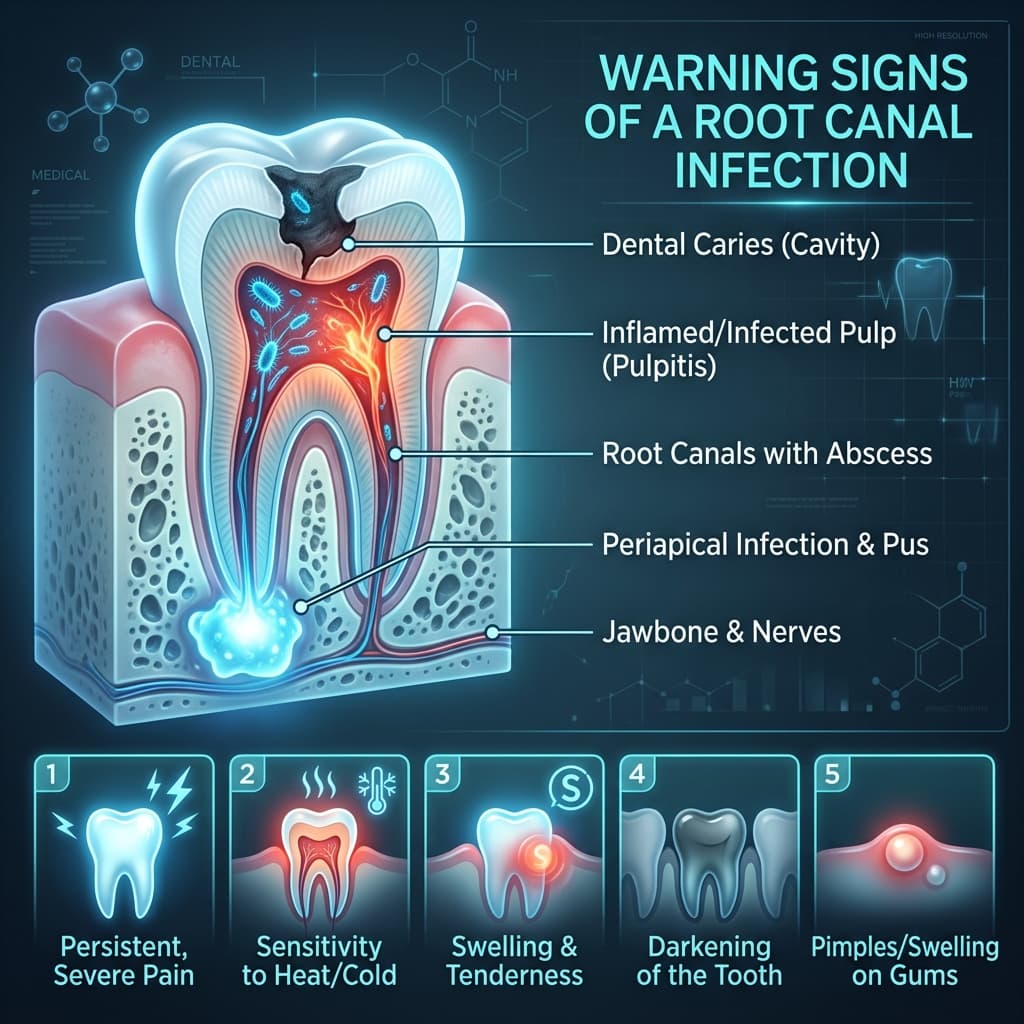
Dental Examination: The dentist first visually examines the tooth and surrounding gums. Signs such as swelling, discoloration, or deep cavities can indicate pulp infection.
Digital X-Rays: Dental X-rays allow dentists to see the internal structure of the tooth and the surrounding bone. They help detect deep decay reaching the pulp, infection at the root tip, and bone loss around the tooth. Modern digital X-rays used at dental clinics provide clear images with minimal radiation exposure.
Sensitivity Tests: Dentists may test the tooth's response to hot or cold temperatures. A healthy nerve reacts briefly, while an infected nerve may cause prolonged or intense pain.
Percussion Test: The dentist gently taps on the tooth to check for inflammation in the surrounding ligament. Pain during this test may indicate infection near the root.
Situations Where Root Canal Treatment Is Recommended
After diagnosing the problem, the dentist may recommend root canal therapy in certain cases.
Deep Tooth Decay: When a cavity progresses through the enamel and dentin layers and reaches the pulp, bacteria infect the nerve tissue. At this stage, a simple filling cannot remove the infection. Root canal treatment becomes necessary to save the tooth.
Severe Tooth Fracture: Cracks in the tooth can allow bacteria to reach the pulp. Even if the crack is small, infection can develop over time. Root canal therapy removes the infected tissue and protects the remaining tooth structure.
Trauma to the Tooth: Injuries from accidents or sports can damage the tooth nerve. Sometimes the tooth may appear normal but the nerve inside becomes inflamed or dies. Dentists may recommend root canal treatment to prevent infection after such trauma.
Repeated Dental Procedures: Teeth that have undergone multiple dental treatments may become weakened or irritated internally. In some cases, the pulp may become inflamed and require root canal therapy.
Why Dentists Try to Save Natural Teeth
One of the primary goals of modern dentistry is to preserve natural teeth whenever possible. Natural teeth provide better chewing efficiency and maintain proper jaw alignment. When a tooth is removed, the surrounding teeth may shift into the empty space, leading to bite problems.
Root canal treatment allows dentists to eliminate infection while preserving the original tooth structure.
What Happens If a Tooth Infection Is Left Untreated
Ignoring a tooth infection can lead to serious dental complications. Bacteria can spread beyond the tooth and affect surrounding tissues. This may lead to the formation of a dental abscess, which is a pocket of pus caused by infection.
Severe infections can cause:
Swelling in the face or jaw
Intense pain
Difficulty chewing
Bone loss around the tooth
Early treatment helps prevent these complications and preserves oral health.
Life After Root Canal Treatment
After a root canal procedure, the treated tooth is usually restored with a dental crown or filling. This restoration protects the tooth and allows it to function normally during chewing. With proper care, a root canal treated tooth can last many years.
Patients are advised to:
Brush and floss regularly
Attend routine dental checkups
Avoid biting hard objects such as ice or hard candies
These habits help maintain the long-term success of the treatment.
Dental Care at Ardent Smiles Dental Clinic
If you experience persistent tooth discomfort or suspect a dental infection, professional evaluation is important. At Ardent Smiles Dental Clinic in Nerul, Navi Mumbai, patients receive personalized dental care using advanced diagnostic technology.
The clinic is led by Dr. Vivek Jaiswar, who specializes in comprehensive dental treatments designed to restore oral health and improve patient comfort. The clinic provides a wide range of dental services including:
Root canal therapy
Dental implants
Crowns and bridges
Tooth extractions
Cosmetic dentistry
Pediatric dental care
Patients from Nerul, Seawoods, Belapur, Vashi, and surrounding areas visit Ardent Smiles for reliable and patient-focused dental care.
Frequently Asked Questions
Can a dentist tell immediately if I need a root canal? Dentists evaluate symptoms, perform examinations, and review X-rays before making a diagnosis.
Does every deep cavity require a root canal? Not always. If the infection has not reached the pulp, a filling may be sufficient.
How long does a root canal treated tooth last? With proper restoration and oral care, the tooth can last many years.
Is it better to remove the tooth instead? Saving the natural tooth is usually the preferred option whenever possible.
Conclusion
Root canal treatment is recommended when infection reaches the inner pulp of the tooth. Dentists carefully evaluate each case through examination, diagnostic tests, and X-rays before recommending this procedure.
Early diagnosis and treatment help prevent serious complications and allow patients to preserve their natural teeth. If you experience persistent tooth pain or signs of infection, consulting a dental professional can help protect your oral health and restore comfort.